What communication partners should know when supporting AAC users
Written by
Harlow (they/them) is a young adult in the United States navigating college as an AAC user and full-time wheelchair user. They use a variety of symbol-based software to communicate. During severe episodes related to their physical disability, they use alternative access methods, including keyguards, switch access, and eye gaze.
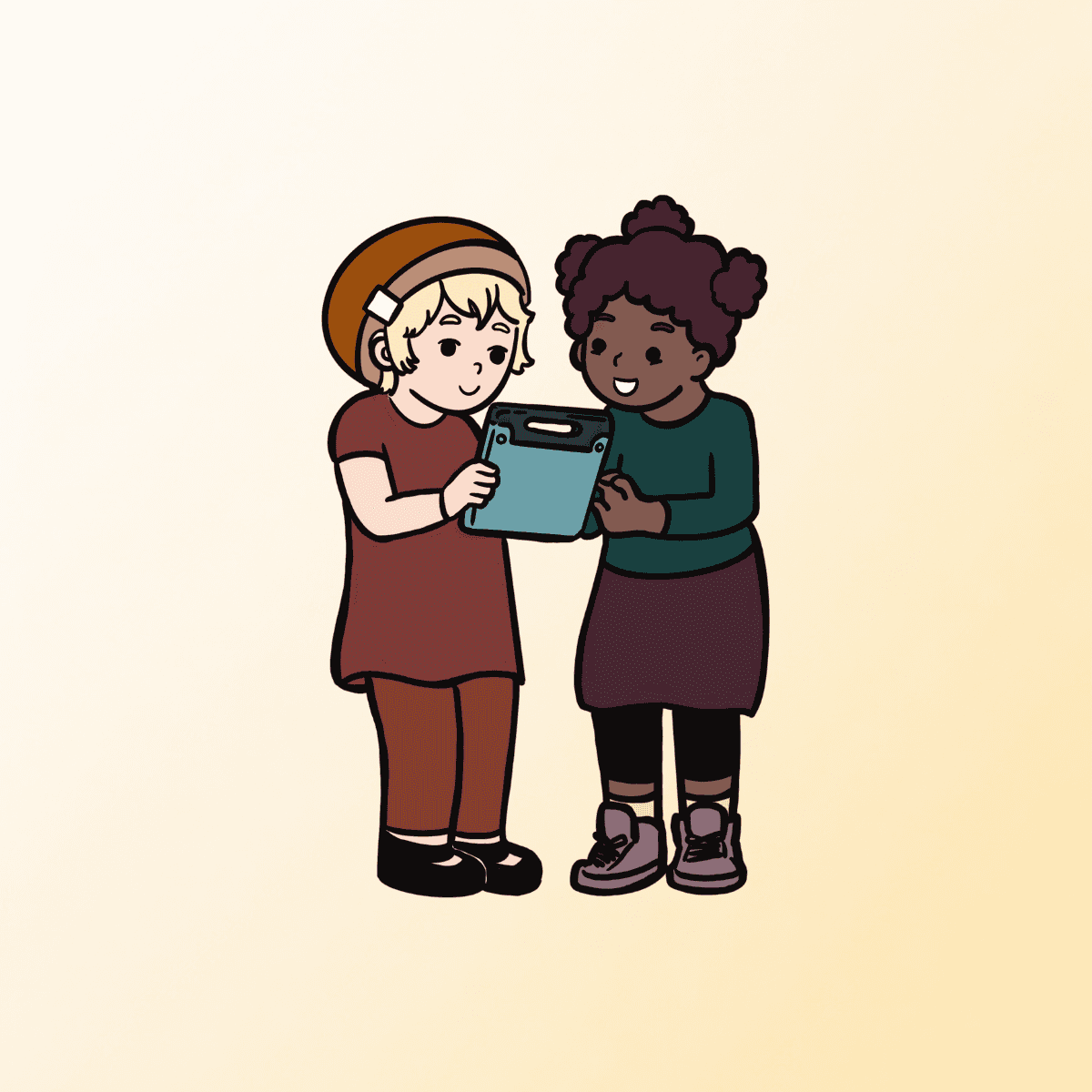
Someone who supports an augmentative and alternative communication (AAC) user is called a communication partner. But what does it mean to be one? This article goes over things that I wish communication partners knew.
Communication requires a multi-modal approach
If you haven’t had to use AAC yourself, try it for a day. Use nothing but a communication app with limited words, limited access to spelling— if cognitive barriers apply. Use no gestures, noises, looking at things, etc. to communicate. It’s hard, isn’t it? When you only acknowledge an individual’s AAC device as their voice, it creates barriers and restrictions on communication. It makes communication slower, especially when you know what they mean.
Instead of only recognising a high tech device as their voice; help them use gestures, signing, noises, head movements, and more to communicate more effectively.
Just because someone can do something, doesn’t mean it’s effective
Do you have an AAC user who uses touch access or keyguards, but gets frustrated really easily? They might need a better access method.
Access needs can fluctuate, some people can have times where they can use direct touch but other times eye gaze would be better. Some good examples of this would be AAC users with Rett Syndrome, periodic paralysis, FND, seizure disorders, and other disorders that affect movement.
Just because someone can use direct touch sometimes doesn’t mean they can always.
Model, but not how you think
The way most people learn language is from hearing and watching people around us model it. This has been repeated over and over and proved in studies that the same applies to AAC users.
So I would like to pose a question, why do we only model the occasional word here and there?
When learning language you don’t just hear someone say “play, play, play, more” when they are playing. They talk, they have conversations.
As a society we tend to underestimate people— especially kids. We use “baby talk” which doesn’t help anyone. Presume competence, the person you are supporting will learn quicker if you talk to them, in their language. Take the time to learn it for them.
Bigger isn’t always better
I’ve noticed that a lot of SLPs and parents, especially when starting with eyegaze, tend to choose a grid size with very big buttons. For some users this is absolutely necessary for them to be successful, but in those cases you need to create a very complex grid with many words and phrases. AAC is highly personal.
For most users, though, they are being underestimated, being started on something that’s more accessible to the communication partner that will hurt the user in the long run. Most users develop a motor plan, so once they learn the vocabulary if you decide they’re “ready for smaller buttons” they have to relearn everything. A general rule is to pick the smallest buttons that a user can see and select. This is very simplified and doesn’t account for cognitive accessibility but it is a great rule of thumb for SLPs and parents new to AAC.
AAC users aren’t a monolith
The last thing I would like to remind you is that what works for one user, might not work for another.
One eyegaze user might prefer to have a big cursor indicating where they are looking, while another needs to not have anything showing so that they can select more accurately.
One user might be using very small, tiny buttons, and another can only do a 3x3 grid because touch access is the most reliable for them.
One person might be prompt dependent, and another is super talkative.
All is good, all is okay, and most importantly, all is communication.
This article was written without the use of generative AI and is not to be used for AI learning.